1. Introduction:
The Invisible Edge in Your Nutrition You work hard, sweat even harder, but is your plate pulling its weight? That protein shake may look the part, but if your nutrition strategy stops at measuring scoops and counting your calories, you are leaving performance gains on the table–literally. A strong fitness routine deserves an equally strong nutrition routine, and you’re doing yourself a disservice if your nutrition isn’t more than just “hitting macros”.
A detailed and well-thought-out sports nutrition plan is the unsung champion of consistency, faster recoveries, and true performance. It’s not only about the amount you’re consuming but about the kinds of foods you’re consuming and why those foods are helpful. Your body isn’t just burning calories; it is building, repairing, and reloading for your next workout.
In this blog, we’re going to highlight the important yet overlooked foods and nutrients that could take your fitness results from mediocre to dialed. From carbohydrates that get a bad reputation to micronutrients that have massive implications, here is what your nutrition may not have and how to change that.

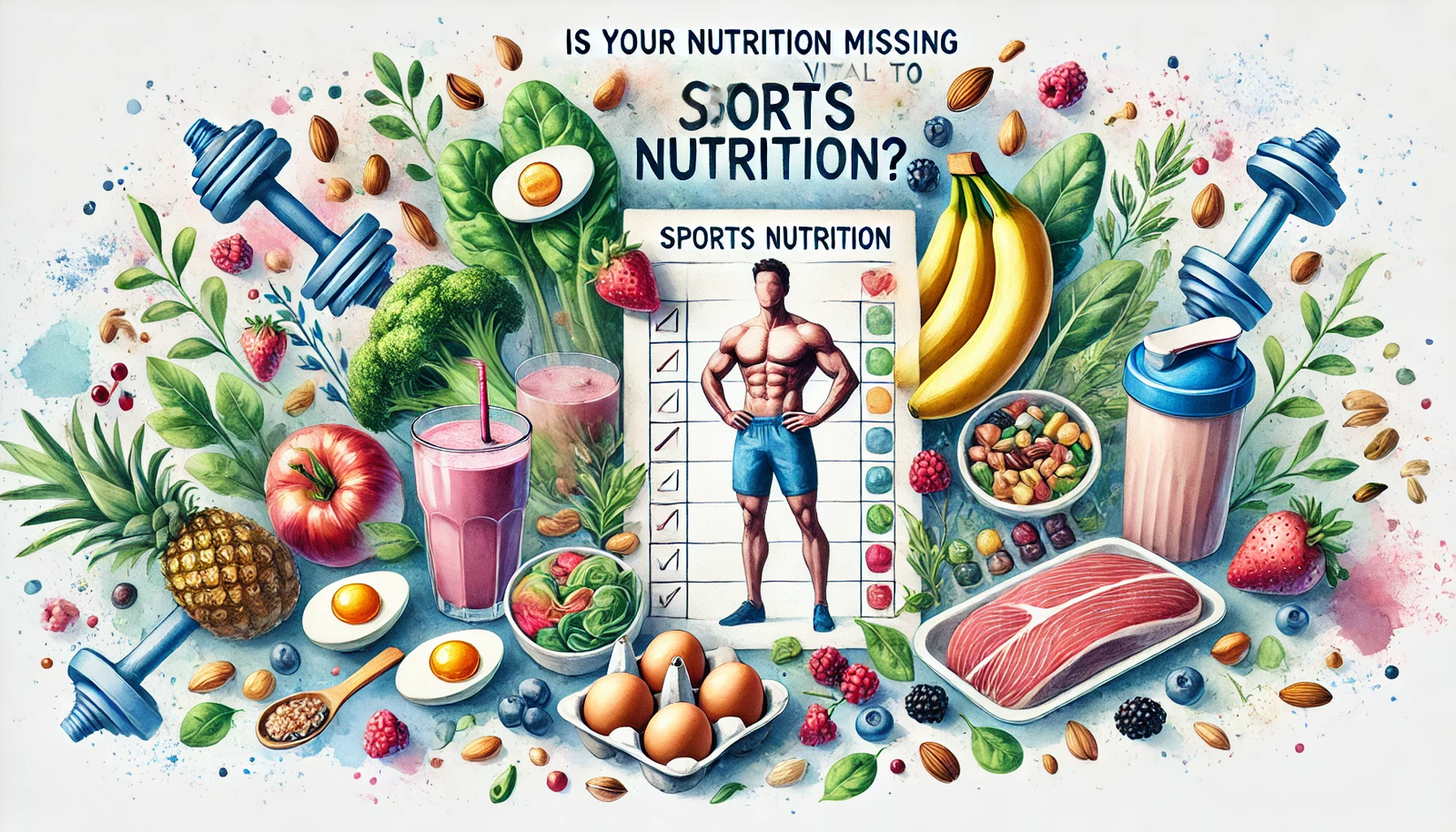
Tags: A watercolor painting illustrating the concept of ‘Is Your Nutrition Plan Missing These Foods Vital to Sports Nutrition?’.
2. Carbohydrates: The performance superstar you may be neglecting for another nasty food!
Carbohydrates have been the whipping boy of the fitness industry for so long with claims linked to weight gain, fatigue, and everything in between.The reality is: carbohydrates are NOT the enemy; If you take performance seriously, they’re your best friend.
Carbohydrates are the PRIMARY fuel source for your body, especially during HIGH intensity or endurance workouts. When you consume carbohydrates, they are stored as glycogen in your muscles and liver, and they can provide a “reservoir” of energy for sprints or long distances. Without enough carbohydrates in your system, you’re simply Aerobic – saying goodbye to performance. If you feel fatigued, have slow recovery and lackluster workouts, odds are that either your total caloric intake is not sufficient, or your carbohydrate intake is insufficient.
When it comes to resistance training, high intensity cardio, running, or cycling up a hill, carbohydrates are what make you perform at your best, and in recovery. The best part about carbohydrates? Not all of them are created equal. If you eat UNREFINED, whole-food carbohydrates, you’re not just getting energy. You’re getting fiber, vitamins, and minerals to help keep your total-body health.
Top Carbohydrate Sources to Drive Performance
Whole grain bread & pasta – These are slow-digesting fuel for sustained energy.
Brown rice & quinoa – A good base for your carbs and absolutely nutrient-dense.
Oatmeal & whole grain cereals – Great fuel before your workout
Fruits – Bananas, apples & berries that provide natural sugar & hydration
Starches – Potatoes, sweet potatoes, & corn are great sources of glycogen & vitamins.
Legumes – A double-whammy of a carbohydrate & protein source.
Bottom line? Don’t be afraid of carbs – fuel with them. The right type of carbohydrate and right amount could be the missing piece in your fitness nutrition.
3. Protein: More Than Shakes and Chicken
In the fitness industry, protein has become the darling of successful gains and rightfully so! Protein helps with muscle repair, recovery, and muscle building. But if your plan to transform your body starts and ends with a daily scoop of whey and grilled chicken breasts, there is a lot more to the story.
When it comes to protein, we can go well beyond the bro-science. Protein is about more than just how much—you also have to consider quality, timing, and variation. Your body wants amino acids in the post-exercise time to build muscles, and while your post-exercise protein matters, drinking a protein shake in isolation from source or context can leave you more plateaued than making gains.
From various protein sources come various nutrients, while some sources include iron and B12, others may include fiber and antioxidants. The best solution? Variety. Give your muscles what they REALLY need! A good quality protein source throughout the day, not just pre- and post-lift.
Best Protein Power Players:
Grilled Lean Meats (e.g., chicken/turkey): Classic complete protein with the least amount of fat.
Fish (any): Magnificent omega-3s and easy to digest.
Soy Products (e.g., tofu/edamame): Plant-based perfection for muscle maintenance.
Beans & Legumes: Bonus points for fiber and slow-digesting carbohydrates.
Low-fat Dairy (e.g., Greek yogurt/cottage cheese): Great option for nighttime recovery.
Eggs: Nature’s multivitamin, in one beautiful shell.
Bottom line: Protein is needed, but judicious athletes know it isn’t just about how much – it’s about how wisely.
4. Healthy Fats: Fuel, Function and Fatty Acids
Fat often gets a bad rep. Not in sports nutrition, though. Healthy fats serve as the quiet MVPs of sports nutrition; providing energy for your endurance, supporting cognitive function, and driving hormone levels that support metabolism and post-exercise recovery.
Carbohydrates will fuel you quickly, whereas fats are slower and longer-lasting energy sources—especially the lower-intensity or endurance exercise. Fats also are critical for the health of your cell membranes, joints, and nervous system. Here’s the kicker: too little fat may undermine your performance by affecting the hormones, including testosterone and estrogen.
So, it’s not always low-fat, especially during heavy training blocks, pursuits of PRs, or when you’re pushing your limits on a regular basis. The best part? Unsaturated fat from whole-food sources.
The Best Sources of Fuel for Fat:
Avocado: High in monounsaturated fats + potassium.
Nuts and seeds: High protein, fats, and minerals in a crunchy snack.
Olive oil and other plant-based oils: Anti-inflammatory, heart healthy fats.
Fatty fish (salmon, mackerel, sardines): Omega-3s for our joints and brains.
To summarize: Good fats are just fuel, they have function. Good fats = good training.
5. Micronutrients: The Little Things With a Big Impact
Micronutrients measurable vitamins and minerals don’t come with crazy cool marketing and scoopable servings! But they’re the real stars in sports nutrition. Micronutrients are the invisible backstage crew making sure your muscles contract when you call, your oxygen gets delivered efficiently, and your muscles recover after every rep, run, or ride.
Take iron for example in your blood it carries oxygen; magnesium helps your muscles contract and relax; B-vitamins fuel your energy metabolism and allow you to convert food into usable energy; zinc helps not only with recovery and immunity but vitamin D which helps strengthen bones, muscles, and helps improve mental focus.
Surprise! Your training increases your needs for all of these micronutrients! Your daily multivitamins will not help if your plate does not do the job.
Top Micronutrient-Rich Foods to Focus On:
Leafy greens (spinach, kale): bumping up iron, calcium, and magnesium with every bite.
Citrus fruits & berries: vitamin C to increase absorption and fight inflammation.
Nuts & seeds: magnesium, zinc, and vitamin E.
Whole grains: get those b-vitamins to support cellular energy.
Seafood: simply the best source of iodine, selenium, and omega-3’s.
Takeaway: macronutrients are not the only priority; micronutrients contribute greatly to performance, recovery, and injury prevention.
6. Hydration: The Most Overlooked Component of Performance
It is not sexy and it sure as hell is not trending, but hydration may be the overlooked piece of your fitness nutrition. And as we all know dehydration of 2% or more can take a serious toll on performance: decreased reaction time, decreased endurance, muscle cramping and mental fog.
Your physiology uses water to regulate temperature, transport nutrients, and excrete wastes. And not only are you losing water while sweating in quantitative terms in the gym or on the field, you are also losing important electrolytes: sodium, chloride, potassium to support proper muscle and nerve function.
Sure, plain ‘ol water is fine but when you are training long, hard, or dealing with the extreme heat? Unfortunately, it often isn’t enough.

7.Hydration Hacks for Athletes in Competition:
Always drink water, and not just when you exercise!
When you exercise longer or wear a heavy sweater, try sports drinks to also replenish lost electrolytes.
Eat foods with water in them (such the fruits & vegetables cucumber, watermelon and oranges).
Listen to your body! Thirst, fatigue, and dark urine are all warning signs.
Bottom Line: Hydration isn’t quenching thirst; it’s maintaining your edge. If you ignore hydration, you’ll hit the wall before the workout begins.
Conclusion
Your Food is Either Fuel or Friction In the end, your nutrition will either be supporting you or quietly working against you. You may have the best training plan, show up to every session, but if your plate is out of sync with your goals, you’ll fall short.
What you eat matters. Carbs fuel performance. Protein rebuilds what training breaks down. Fats regulate hormone levels. Micronutrients fine-tune the whole machine. And oh, what about hydration? That’s the oil in the engine.
FAQ
Q1. Are carbs really necessary when I want to lose fat and build muscle?
A: Yes. Carbs are not the enemy. They are the primary source of energy and significantly more important when performing intense workouts. When you cut carbs too low your performance will suffer resulting in reduced recovery. Think unrefined whole-food carbs—oats, quinoa, sweet potato—in order to sustain energy levels and make progress in fat loss and building muscle.
Q2. How much protein do I really need each day?
A: There is not one standard amount because it depends on body size and intensity of physical training. However, for most active individuals, a safe range is 1.2 to 2.0 grams of protein per kilogram of body weight each day. Distribute the protein intake throughout meals and snacks to keep amino acids circulating and to provide your body the building blocks to recover. Do not depend solely on shakes. Include a variety of protein sources such as fish, eggs, dairy, legumes, and tofu in order to get all the essential and nonessential amino acids.
Q3. Can eating fat slow my progress?
A: Not if it’s the right kind. Healthy fats contribute to hormone function, joint health, and lasting energy. If you cut your fats too low, you could jeopardize recovery and metabolism. Focus on unsaturated fat sources like avocados, nuts, seeds, olives, and fatty fish for the best balance and performance.
Q4. Do I need to take supplements if I’m training hard?
A: Supplements are designed to fill holes, not to replace a good diet. Start with food first, and then if you are training consistently and struggling to meet your needs, try to have your micronutrients assessed to inform whether that’s the issue, and speak with a sports nutritionist to develop a tailored plan.

